Read the Grant Guidelines the Way a Reviewer Will
Granteon ·
Funders publish guidelines so reviewers can score a pile of applications fast and consistently. Every 'must,' 'should,' and 'priority' in that document is a line on somebody's scoresheet. Read the guidelines as a rubric instead of a brochure and the guessing stops.
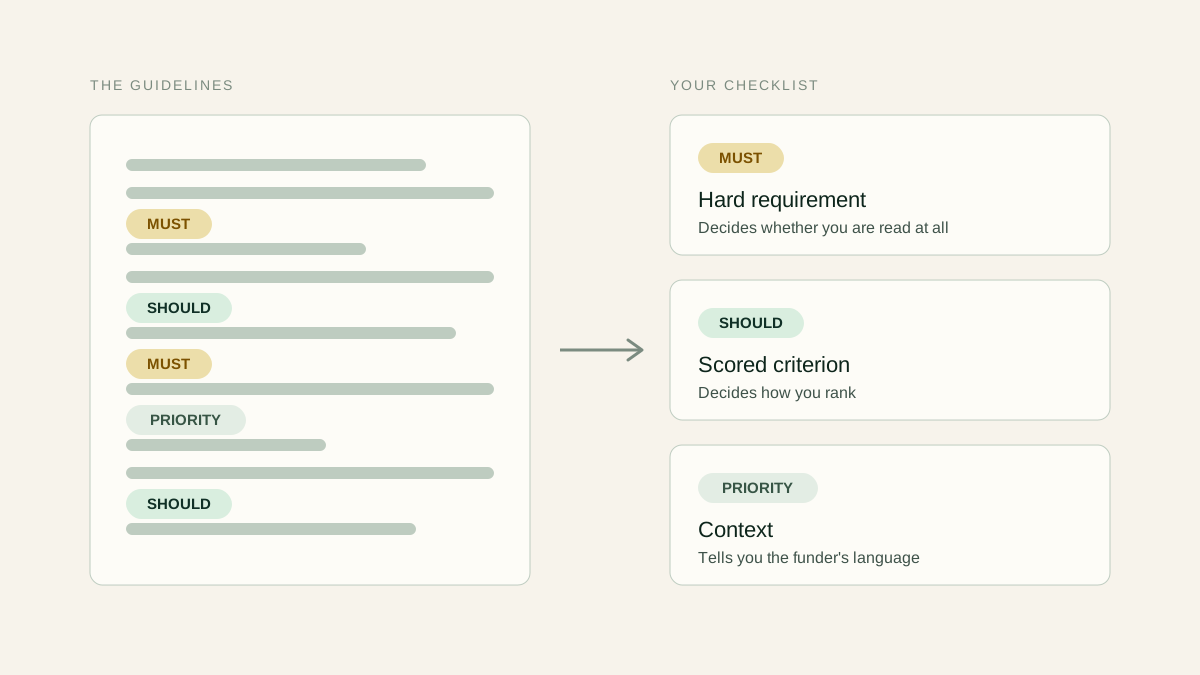
Turn the Guidelines Into a Checklist
Paste the guidelines into a doc and split them one requirement per line. Tag each line as a hard requirement, a scored criterion, or context. Hard requirements decide whether you get read at all. Scored criteria decide where you rank. Context tells you the funder's vocabulary, which brings me to the next point.
Use their headings and their words in your proposal. Funding for Good calls out 'language and terminology preferences' as one of the instructions people skip. A reviewer scanning for 'measurable outcomes' finds it faster when your section is literally called Measurable Outcomes.
Answer What Was Asked
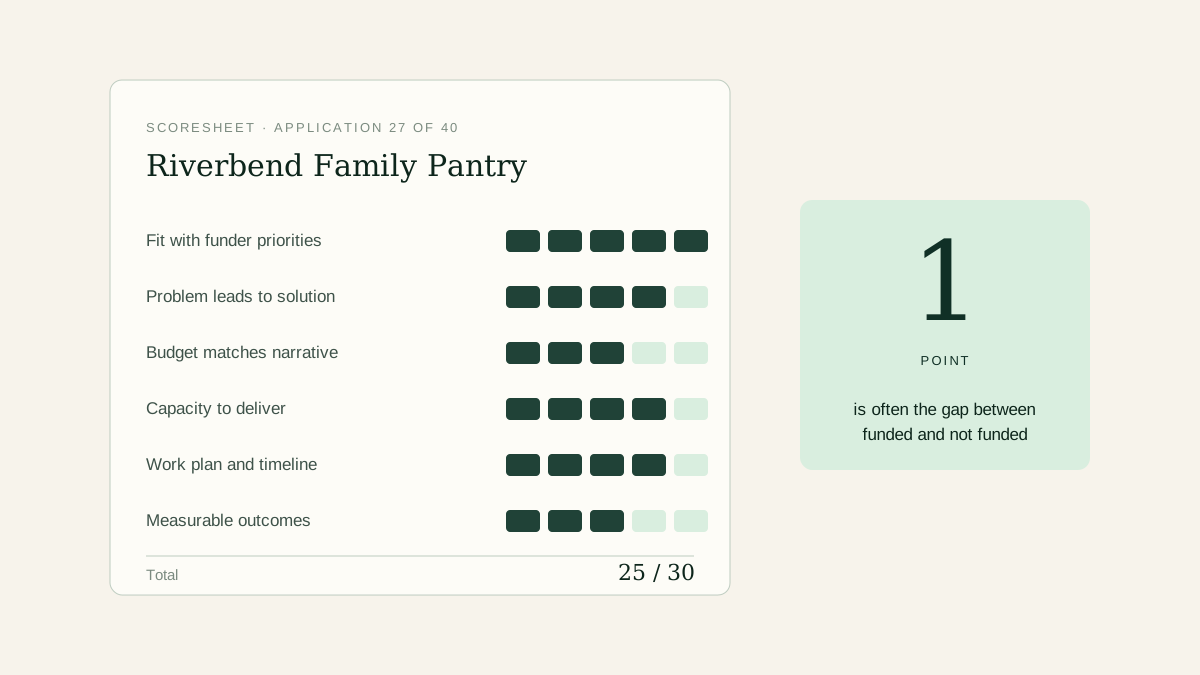
The most common way to lose points is answering a nearby question. The funder asks how you will evaluate the program, and you describe the program. SUNY Geneseo's list of why proposals get rejected includes convoluted reasoning and excessive repetition, and both usually come from not answering the actual prompt. Read each of your answers next to the question it responds to, and cut anything that does not respond.
Be Honest About the Fit
If the guidelines describe an organization that is not yours, a great proposal will not close the gap. Grants Plus has fit near the top of their rejection list for a reason. Spend the hours on a funder whose priorities you already meet. The best proposals we have seen are the ones where the fit existed before anybody typed a word.