What Grant Reviewers Score Before They Read Your Story
Granteon ·
Grant reviewers do not read your proposal. They score it. A typical reviewer has forty applications in a stack, a rubric from the funder, and a consensus meeting on Friday. A working reviewer who runs Spark the Fire says the difference between funded and not funded is often a single point, and from what we have seen that point almost never gets lost on the writing. It gets lost on a checkbox.
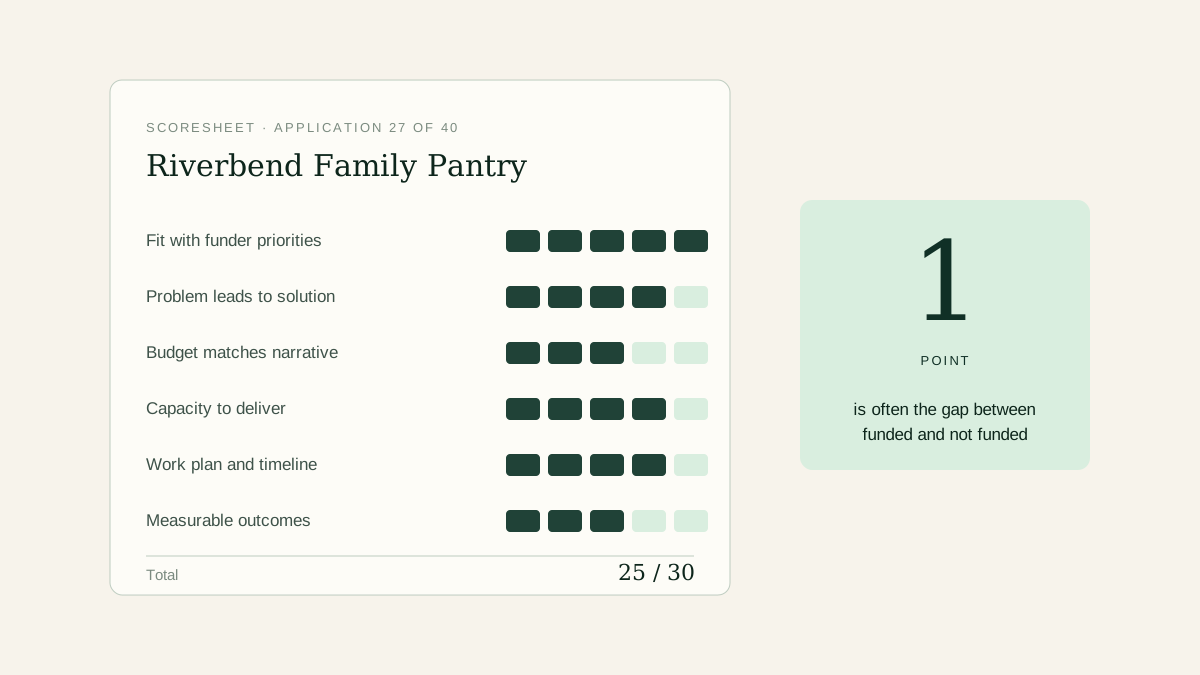
1. Fit Gets Scored First
Every source we read for this post agrees on the number one reason for rejection: the project did not match what the funder said they fund. Grants Plus puts 'mission or program fit isn't evident' near the top of their list, and they mention some foundations fund only 1 to 10 percent of what comes in. A beautiful proposal to the wrong funder loses to a plain one to the right funder every single time.
To find out whether you fit, read their annual report and their last grantee list, not just the guidelines page. If you cannot point at a recent grantee that looks like you, pick up the phone, get the program officer, and describe your idea in two sentences. It feels awkward the first time. It is also the introduction most rejected applicants never made.
2. Open the Need Statement With Your Numbers, Not the Nation's
Candid keeps the need statement to one page and says to pair data with a human story. The data that works is local: the waitlist at your clinic, or how many families your county food bank turned away last January. A national statistic tells the reviewer the problem exists somewhere. Your number tells them it exists here, and that you are close enough to it to count.
Then answer the question the reviewer is silently asking: why should this funder care? Tie your need to a priority they wrote down in their own words.
3. Lead With Outcomes, Then Activities
The biggest shift in grantmaking right now is funders paying for change instead of activity. 'We will run twelve workshops' is an activity. 'Sixty participants will still be employed six months after the program, up from thirty-five today' is an outcome. Lead with the second one. The workshops show up later as how you get there.
Candid draws the line between broad goals and SMART objectives: specific, measurable, attainable, relevant, timebound. When a reviewer is scoring 'measurable outcomes,' they are hunting for a number, a baseline, and a date. Give them all three in one sentence and move on.
4. The Budget Is a Lie Detector
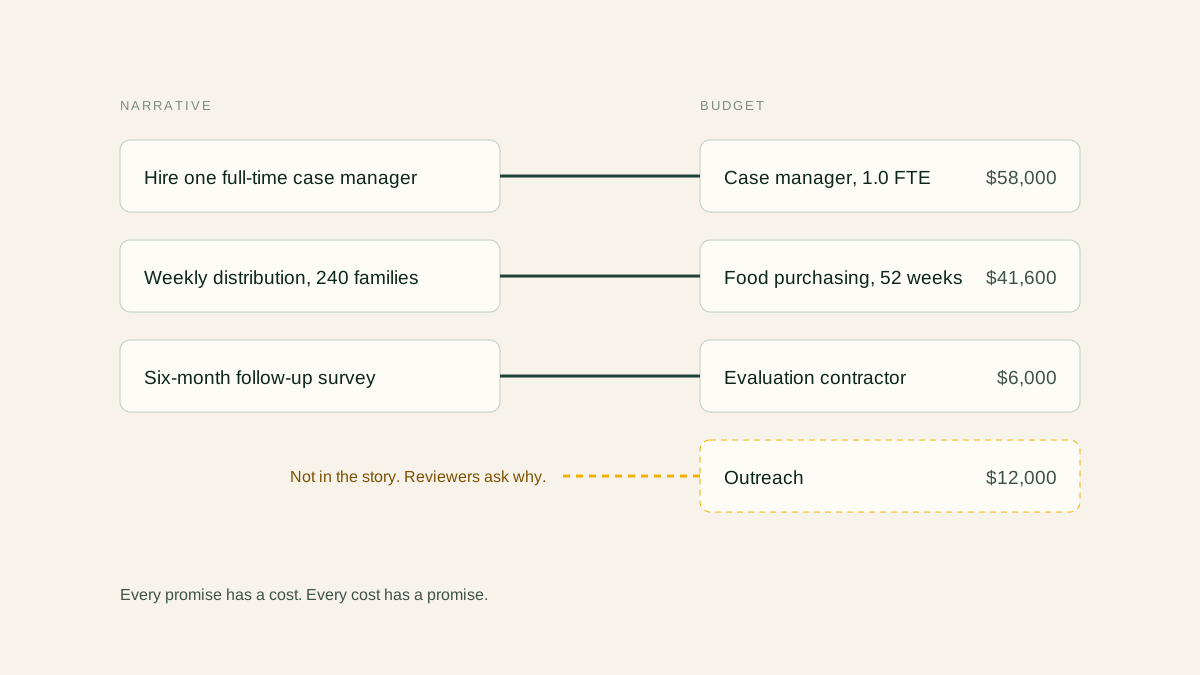
Reviewers read the budget to check the story. Every line in the table should point at a sentence in the narrative, and every promise in the narrative should have a price. A case manager in the story with no salary in the table? Twelve thousand dollars of 'outreach' the story never mentions? That is the gap that costs you the point.
Write a budget narrative that explains each big line: what it buys, how you got the number, and which lines this particular grant would cover. Have a second person check the arithmetic, because a total that does not add up gets read as a preview of how you would handle their money.
5. Prove You Can Carry It
Funders give money to organizations that have shown they can manage money. Montana State's sponsored programs office lists failing to demonstrate fiscal accountability as a standard reason proposals get turned down. Hand the reviewer the evidence: years operating, a clean audit or a treasurer's statement, staff who have run something like this before, a partner whose name they recognize.
If you have a weakness, name it and say what you are doing about it. Reviewers will notice the gap anyway, and the applicant who noticed first is the one they trust.
6. A Timeline Beats a Paragraph of Good Intentions
A work plan with months and owners scores higher than 'we will begin implementation upon award.' Month one, hire. Month two, enroll. Quarter two, first cohort. Quarter four, evaluation. And match your project period to the funder's grant cycle. A program that starts before the award date is one of the most common rejections out there and one of the easiest to avoid.
7. Directions Are the First Test
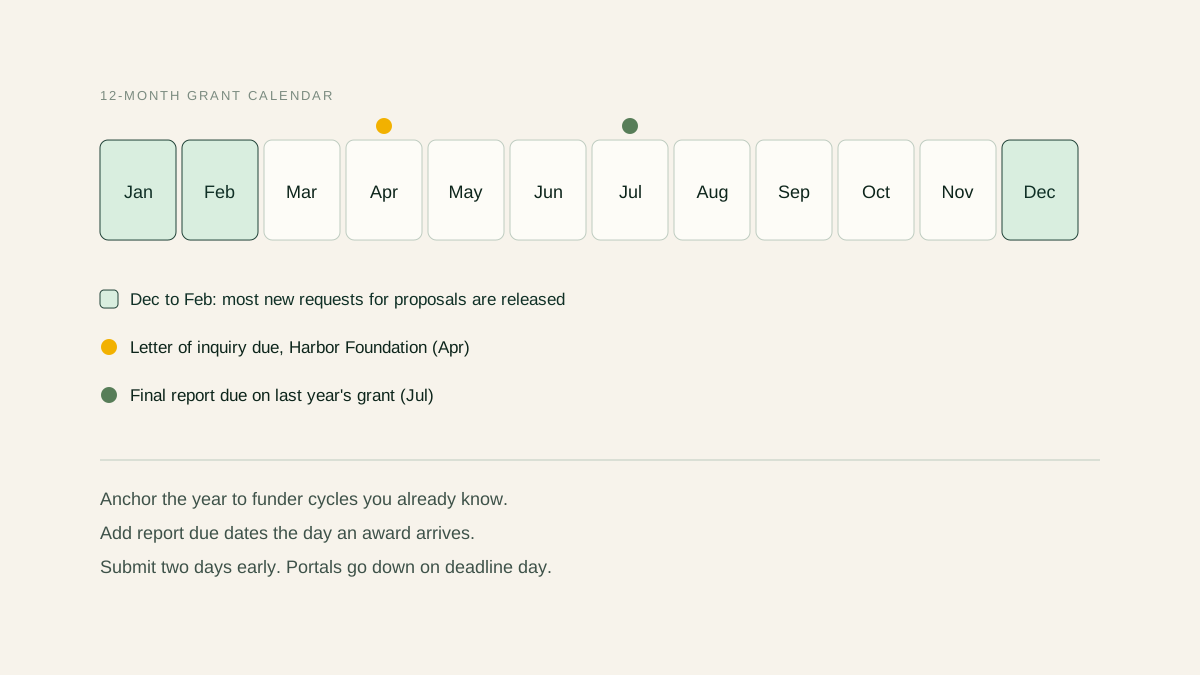
Miss the deadline, skip a required attachment, or blow past a page limit and the review ends before it starts. Pull the funder's current format and attachment list weeks ahead. Most new requests for proposals drop between December and February, so a twelve month calendar anchored to funder cycles you already know turns the annual scramble into a schedule.
Put the report due dates for grants you already won on the same calendar. An impressive, on-time report is the strongest application you will ever send that funder.
Make Every Check an Easy Yes
Use the funder's own headings. Put the number, the baseline, and the date where a skimming reviewer will trip over them. Before you submit, hand the draft to someone outside the project along with the rubric and ask them to score it. Whatever they could not find, fix. The story still matters. The best proposals pull the reader in until they forget they are holding a rubric. But nobody gets pulled in until the checks are passed, so score your own draft first. The reviewer will, and they will not be as nice about it.