Reuse Past Grant Proposals Without Copy-Pasting Them
Granteon ·
A funded proposal is the best writing sample you own. It has the numbers that were true, the phrasing that landed, and the structure a reviewer rewarded. It is also two years old, written for a different funder, and full of dates that already passed. Reusing it takes some care.
Keep the Facts, Retire the Frame
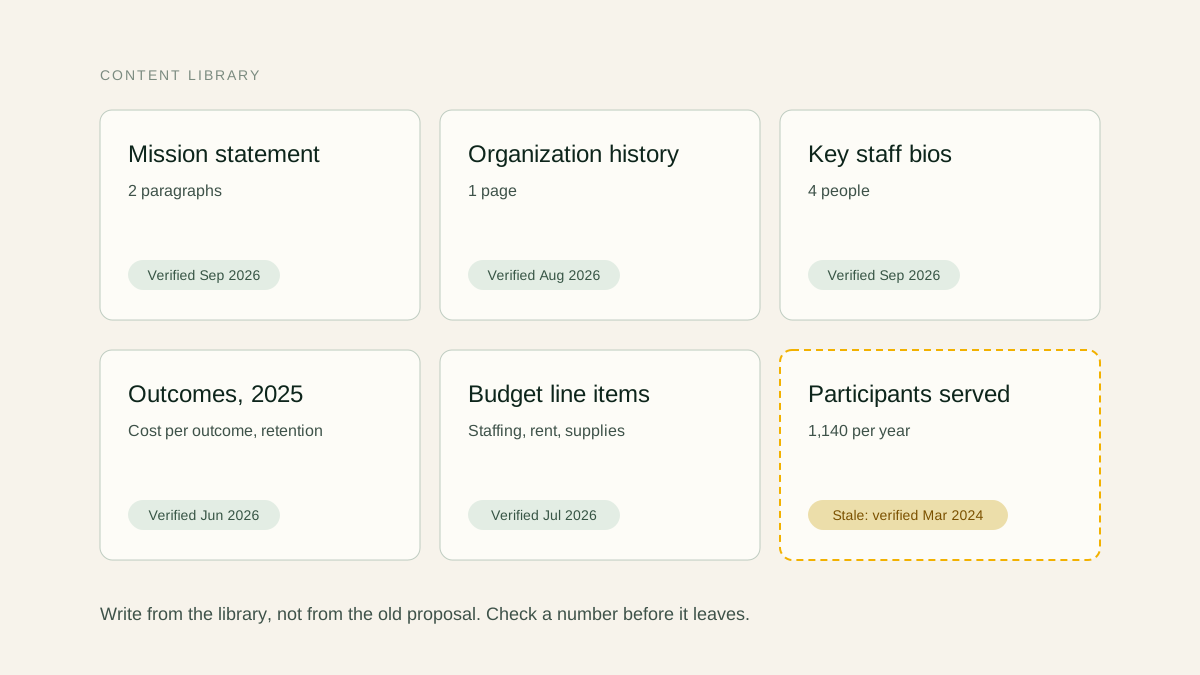
Pull the reusable parts into a working library: mission statement, organization history, program descriptions, outcomes with their dates, staff bios, budget line items. Every entry gets the date you last verified it. Funding for Good calls this boilerplate and recommends templates that answer most of what funders ask. Vee calls it a content vault. Whatever you call it, you write from the library, not from the old proposal.
The frame of the old proposal, its opening, its argument, its ask, belonged to that funder. A new funder needs a new frame around the same facts.
Refresh Before Reuse
Before a number leaves the library, check it. Participant counts drift, and so does your cost per outcome. Staff turn over. A reviewer who catches one stale figure starts doubting all the others, and you will not be in the room to defend them.
Keep Your Voice
Reusing your own writing keeps the proposal in your organization's voice, and that voice is what makes it believable. That is why Granteon drafts from your past proposals instead of a generic template: the assembly is fast and the voice stays yours. Vee lands in the same place and says to use AI for drafting and planning, not for the final voice. Read the result as an editor, not the author, and the draft turns into a proposal.